The Schwartz-Arad Masterclass Q&A is built for dental surgeons who want real answers to real surgical challenges. Every question here connects directly to advanced dental implant surgery, bone augmentation, sinus augmentation techniques, and soft tissue management — explained through clear, structured surgical protocols and illustrated with real clinical case videos.
Answer: The Schwartz-Arad Dental Surgical Masterclass is an advanced online educational platform built around evidence-based dental surgical techniques, clearly defined surgical protocols, and real clinical case videos. The program is designed to strengthen predictable outcomes, reduce complications, and sharpen real-world surgical decision-making in implant and reconstructive dentistry.
Answer: The Q&A section addresses questions related to:
Answer: This program is designed for:
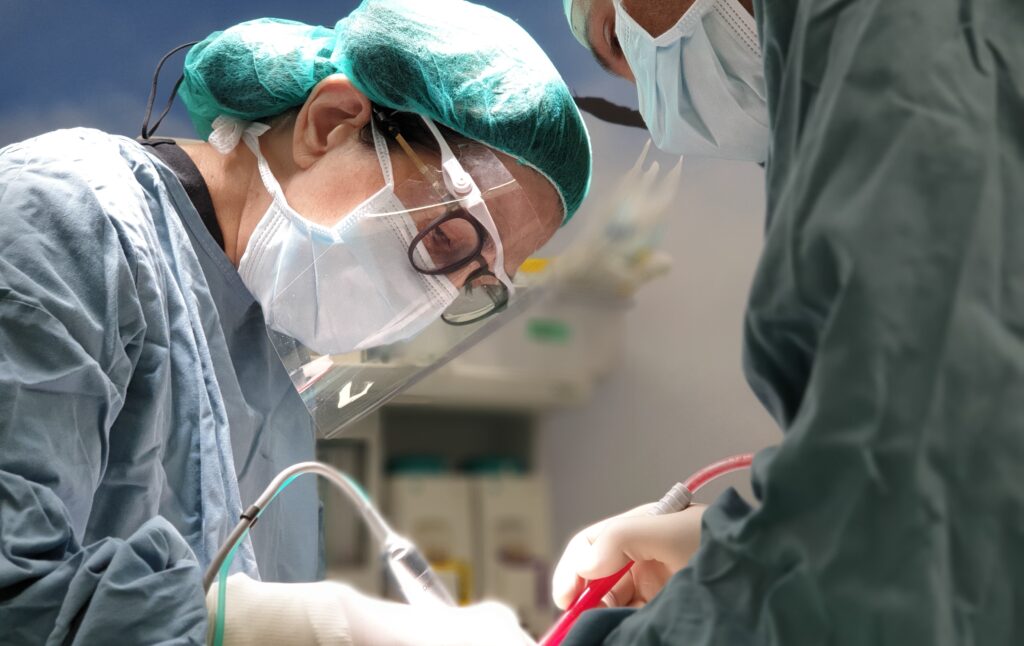
Answer: Yes. Every video shows real clinical cases performed on real patients — not staged or idealized scenarios. You’ll see authentic anatomical variation and the intra-operative decision-making that defines advanced dental surgery in everyday practice.
Answer: Video-based learning lets participants:
Answer: Complications are addressed openly and systematically. The Q&A section covers:
Answer: Yes. You can submit questions or anonymized case details directly through the website, and selected cases may be featured in future Q&A updates. Get in touch here.
Answer: Absolutely. Every protocol is designed to be applied directly in daily surgical practice, with a constant focus on predictability, efficiency, and patient safety — not theory for its own sake.
Answer: The Q&A section is updated regularly with new clinical questions, surgical insights, and case-based discussions, aligned with new Masterclass releases.
→ Sign up to be notified when new Q&A and case videos go live
Explore frequently asked clinical questions across the main fields of implant and regenerative surgery. Each topic is supported by real surgical case videos demonstrating treatment planning, operative techniques, intraoperative decision-making, management of unexpected findings, and clinical outcomes.
Answer: The decision is based on several clinical and anatomical factors, including the presence and extent of infection, socket morphology, integrity of the socket walls, soft-tissue conditions, esthetic demands, and the ability to achieve adequate primary stability.
Immediate implant placement may be considered when the biological and mechanical conditions are favorable. In compromised sites, delayed placement may provide a more predictable environment for tissue healing and implant positioning.
The Masterclass case videos demonstrate how these criteria are evaluated and applied in real clinical situations.
Answer: Primary stability depends on careful assessment of bone quality and quantity, precise osteotomy preparation, appropriate implant design and dimensions, three-dimensional implant positioning, and controlled insertion.
Intraoperative tactile feedback is also important and may require modification of the planned drilling sequence or implant selection. The clinical videos demonstrate, step by step, how surgical protocols are adapted according to local anatomy and bone conditions.
Answer: Guided bone regeneration may be suitable for horizontal defects and selected vertical deficiencies when adequate membrane stabilization, space maintenance, vascularization, and tension-free closure can be achieved.
Autologous onlay block grafting may be considered in more advanced defects that require structural support or substantial restoration of ridge volume.
The choice is not based solely on defect size. It also depends on defect morphology, soft-tissue conditions, anatomical limitations, treatment time, and the surgeon’s experience. Both approaches are demonstrated through real surgical cases.
Answer: Graft selection depends on the size and morphology of the defect, the required volume and structural stability, healing time, vascular supply, and patient-specific risk factors.
Autologous bone, xenogeneic materials, allogeneic materials, and composite grafts may be used alone or in combination. The Masterclass videos demonstrate the clinical indications, handling characteristics, and limitations of different grafting approaches.
Answer: The choice is influenced by residual bone height and width, sinus anatomy, the required amount of elevation, membrane morphology, implant position, and the possibility of achieving primary stability.
A lateral-window approach is generally considered when substantial vertical augmentation is required or when direct visualization of the sinus membrane is advantageous. A transcrestal approach may be appropriate in selected sites with moderate vertical deficiency and favorable anatomy.
The Masterclass videos demonstrate how the surgical approach is selected and modified according to the clinical findings.
Answer:
Management depends on the size, location, accessibility, and configuration of the perforation.
Possible approaches include repositioning the membrane, covering the perforation with a resorbable collagen membrane, modifying the grafting procedure, reducing the graft volume, or postponing augmentation when predictable membrane containment cannot be achieved.
The sinus augmentation cases demonstrate practical methods for managing different types of membrane perforations and adapting the surgical plan.
Answer: Soft-tissue thickness, quality, vascularity, and stability influence wound healing, graft protection, peri-implant tissue health, plaque control, esthetics, and long-term maintenance.
Effective soft-tissue management begins with incision design and flap elevation and continues through tissue mobilization, graft coverage, and tension-free closure. These principles are demonstrated throughout the clinical video library.
Connective tissue grafting may be considered in patients with thin soft tissues, esthetic deficiencies, ridge contour defects, recession risk, or insufficient tissue volume around implants and prosthetic restorations.
The indication, timing, donor-site selection, and grafting technique should be determined according to the clinical objective. The Masterclass cases demonstrate connective tissue grafting before, during, and after implant placement.
Answer: Early implant failure should be evaluated systematically. Possible contributing factors include infection, insufficient primary stability, excessive micromovement, impaired healing, unfavorable bone conditions, surgical trauma, and patient-related risk factors.
Management may include implant removal, debridement, evaluation of the defect, infection control, tissue healing, and staged retreatment. The case videos demonstrate diagnostic reasoning, removal techniques, and treatment planning following early implant failure.
Answer:
Revision surgery begins with identifying the probable cause of failure. Factors may include infection, membrane exposure, graft instability, inadequate vascularization, soft-tissue deficiency, excessive tension, or inappropriate case selection.
Treatment may involve removal of failed graft material, debridement, management of scar tissue, improvement of the soft-tissue envelope, and selection of a modified or staged augmentation protocol.
The Masterclass cases demonstrate how failed sites are reassessed and reconstructed while reducing the risk of repeated complications.
Answer: CBCT imaging is an important component of surgical planning. It enables three-dimensional evaluation of bone volume, defect morphology, sinus anatomy, adjacent teeth, anatomical structures, and potential surgical risks.
However, CBCT findings must be integrated with the clinical examination, soft-tissue assessment, prosthetic objectives, and patient-specific considerations. The Masterclass emphasizes comprehensive risk assessment rather than reliance on imaging or digital templates alone.
Answer: Surgical protocols provide a structured and reproducible foundation, but they must remain adaptable to intraoperative findings.
Bone quality, defect morphology, membrane condition, tissue tension, primary stability, and unexpected anatomical variations may require modification of the original plan.
This is a central principle of the Schwartz-Arad Surgical Masterclass: developing clinical judgment and decision-making skills rather than simply reproducing a sequence of technical steps.
How this Q&A works with the surgical case videos: Each question links to one or more real clinical case videos, showing exactly how each protocol plays out in surgery. Videos are left unedited, so you see the same conditions, challenges, and decisions a surgeon faces in daily practice.
Join dental surgeons who are sharpening their surgical decision-making with real cases and real complications.
This content is intended for educational purposes for licensed dental professionals only.
Clinical decisions should be based on individual patient assessment and professional judgment.
Elevate your practice and Sharpen your skills to expand your expertise with our diverse, cutting-edge dental continuing education courses. Enroll today for professional growth.